
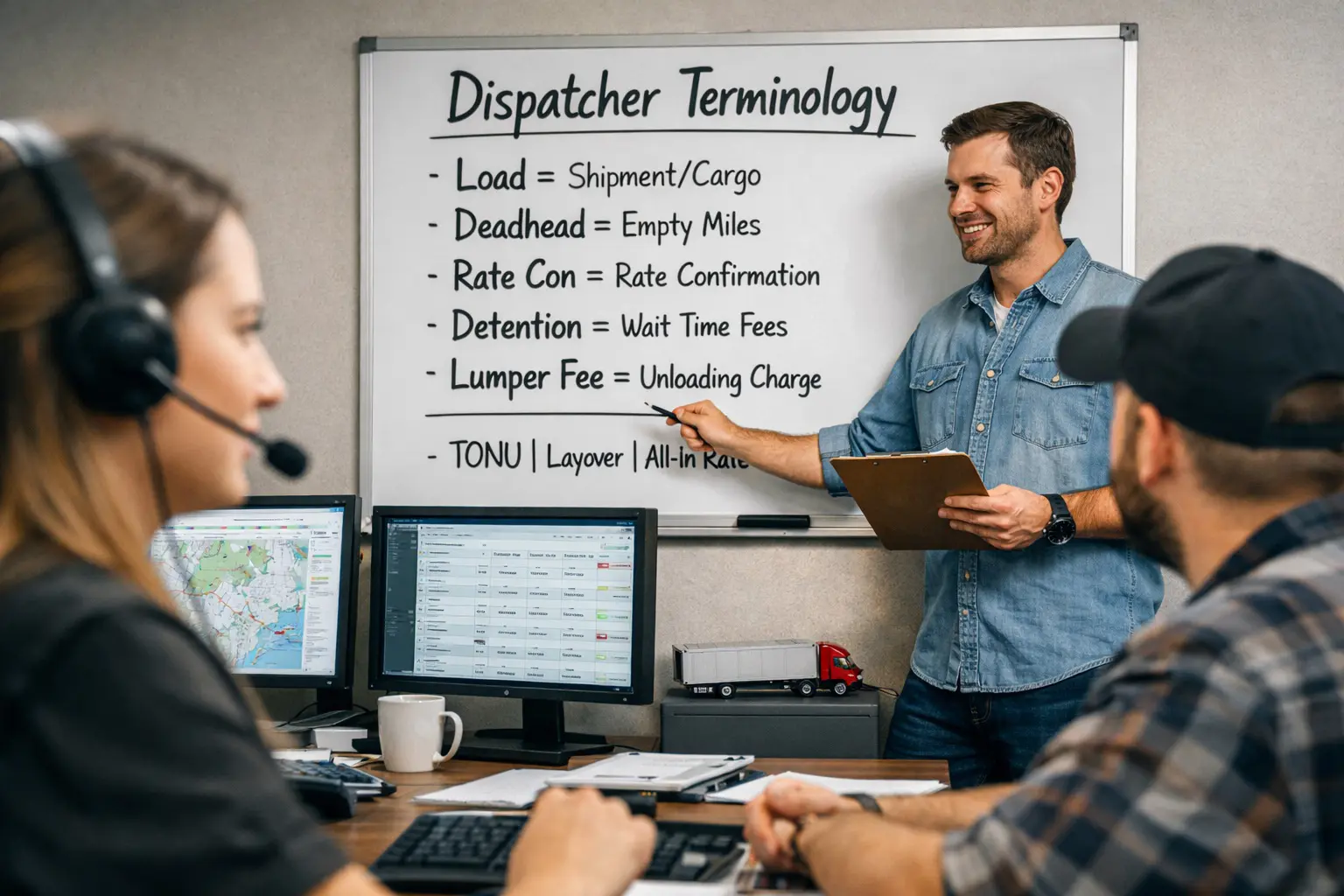
Truck dispatching has its own language—and mastering it is essential for smooth operations, clear communication, and professional credibility. Whether you’re a new dispatcher, a truck driver, or a fleet owner, understanding dispatcher terminology helps avoid costly misunderstandings and builds trust across the supply chain. At TRYKING, we believe strong communication starts with speaking the same language.
Why Dispatcher Terminology Matters
In trucking, time is money. Misunderstood terms can lead to missed appointments, rate disputes, or compliance issues. When dispatchers and drivers clearly understand industry terminology, decisions are faster, operations are smoother, and relationships are stronger.
-
Efficiency: Clear terms reduce back-and-forth and speed up load execution.
-
Professionalism: Speaking the industry language builds credibility with brokers and shippers.
-
Trust: Everyone knows exactly what is expected.
Common Dispatcher Terms Every Professional Should Know
Below are some of the most commonly used dispatching terms you’ll hear daily in trucking operations:
-
Load: The freight or cargo being transported.
-
Rate Confirmation (Rate Con): A document confirming payment terms, pickup, and delivery details.
-
Deadhead: Miles driven without cargo.
-
Detention: Compensation paid when a driver is delayed at pickup or delivery beyond agreed time.
-
Lumper Fee: A fee paid for loading or unloading services.

Broker vs Dispatcher Language: Why It Matters
Dispatchers often communicate with freight brokers, each using overlapping but distinct terminology. Understanding broker language helps dispatchers negotiate better rates and avoid contract misunderstandings.
All-In Rate: Total payment including fuel surcharge.
TONU: Truck Ordered Not Used—compensation for canceled loads.
Layover: Payment when a driver must stay overnight due to delays.
Clear Language Prevents Costly Mistakes
When dispatchers fully understand terminology, they can protect drivers from unpaid miles, avoid compliance issues, and ensure accurate billing. Knowledge is leverage in every negotiation.
How TRYKING Trains Dispatchers to Speak the Language
At TRYKING, mastering dispatcher terminology is part of our culture. Our team is trained to communicate clearly with drivers, brokers, and shippers while delivering reliable truck dispatch services across the U.S.
Standardized terminology training
Real-world dispatch scenarios
Clear documentation and rate reviews
Language Builds Confidence and Careers
Dispatchers who master industry terminology operate with confidence, earn respect faster, and advance more quickly. Clear communication is one of the most valuable dispatching skills.
Start Speaking Dispatch Like a Pro
Whether you’re new to trucking or refining your dispatch skills, learning the language is a powerful step toward success. Terminology connects people, processes, and profits.
Looking to build a professional dispatch career? Explore truck dispatcher jobs at TRYKING and join a team that values clarity, competence, and culture.
Final Thought: In trucking, clear language keeps freight moving. At TRYKING, we don’t just dispatch loads—we communicate with purpose.