
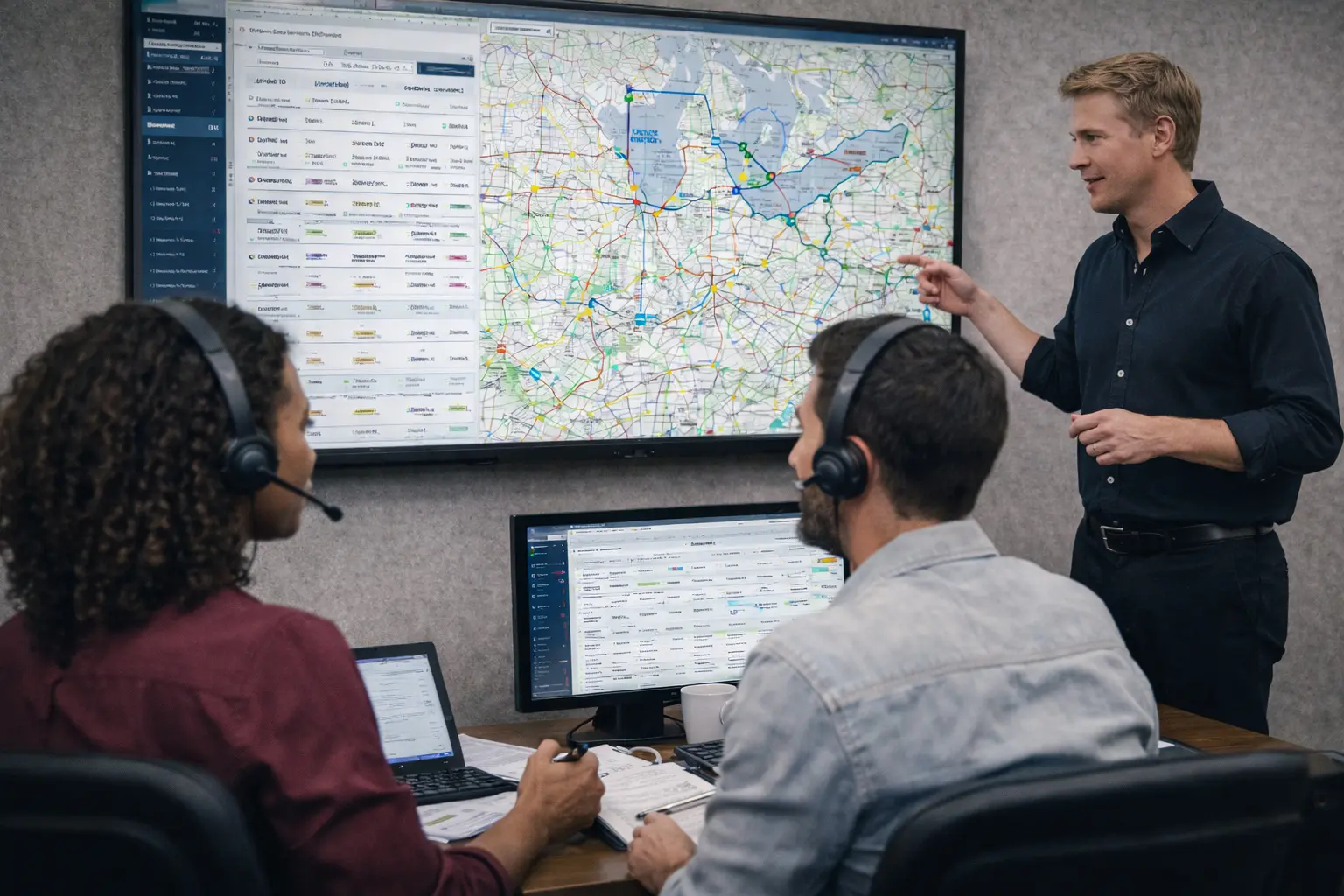
Great dispatching doesn’t happen by accident—it’s trained, refined, and reinforced every day. At TRYKING, we believe professional dispatchers are built through structure, accountability, and real-world exposure. Our training process is designed to produce dispatchers who communicate clearly, act ethically, and support drivers with confidence.
Why Dispatcher Training Matters
Dispatchers sit at the center of trucking operations. One unclear instruction or missed detail can impact drivers, brokers, and customers alike. That’s why TRYKING treats dispatcher training as a core investment—not an afterthought.
Operational accuracy: Reducing costly mistakes before they happen.
Professional communication: Clear, respectful interaction with drivers and brokers.
Ethical decision-making: Doing the right thing, even under pressure.
Step 1: Strong Foundations in Dispatch Basics
Every dispatcher at TRYKING begins with a structured foundation. This phase focuses on understanding trucking workflows, terminology, and responsibilities before handling live operations.
Dispatcher terminology and documentation
Load boards, rate confirmations, and compliance basics
Understanding driver expectations and constraints
Step 2: Real-World Scenario Training
Theory alone isn’t enough. Our dispatchers are trained using real-life scenarios that reflect everyday challenges in trucking—delays, weather disruptions, rate negotiations, and last-minute changes.
Handling detention and layovers responsibly
Problem-solving under time pressure
Clear escalation and resolution processes

Step 3: Communication & Ethics Training
At TRYKING, how something is said matters as much as what is said. Dispatchers are trained to communicate with clarity, patience, and respect—especially during stressful situations.
Transparent rate discussions
Respectful driver communication
Accountability and follow-through
Culture Over Shortcuts
We don’t train dispatchers to chase quick wins. We train them to build trust, protect drivers’ time, and uphold professional standards that strengthen long-term relationships.
Step 4: Supervised Live Operations
Before operating independently, dispatchers work under supervision. This ensures accuracy, reinforces best practices, and builds confidence in real dispatch environments.
Live load handling with senior oversight
Performance reviews and feedback
Continuous improvement mindset
How Training Reflects TRYKING Values
Our training process directly reflects TRYKING’s commitment to accountability, professionalism, and driver-first operations. Every dispatcher is trained not just to manage freight—but to represent our values.
Interested in joining a team that invests in people and professionalism? Explore truck dispatcher jobs at TRYKING and grow your career the right way.
Final Thought: At TRYKING, dispatchers aren’t just trained to do the job—they’re trained to do it right.